
Dr. Cheryl Fields, DO
Pediatric Neurologist
MS Nutrition
Lend Fellow
My career began as a Physician Assistant in the Emergency Department. Later, motivated by a deep passion for supporting children and families, I pursued medical school with the sole intention of becoming a child neurologist specializing in neurodevelopmental disabilities and childhood neurological disorders. My passion is rooted in personal experience and a profound appreciation for the guidance my family received during challenging times. This drove me to pay it forward by establishing ICAN. Our mission is to improve every child’s life by optimizing their health and well-being, empowering them to achieve a promising and enviable future.
Dr. Fields’ Bio:
-
Throughout my academic career, I have excelled. Early in my education, I was awarded a full academic scholarship to St. John’s University, where I earned my degree as a Physician Assistant. I began my career in emergency medicine, most recently at New York-Presbyterian/Columbia University. My commitment to optimizing the nutritional and medical health of my patients inspired me to pursue a degree in Human Nutrition from Columbia University.
After personally experiencing the process of many evaluations with my own child, I was frustrated by the limited understanding that many physicians have regarding neurodevelopmental disease and struck by the splintered access to treatment and resources. So, I decided to go to medical school. I attended Touro College of Osteopathic Medicine in Harlem, staying close to my home and family. I graduated in the top 10 of my class and was awarded a medical student research scholarship in 2017 from the Foundation of the Consortium of MS Centers. Following medical school, I joined Einstein’s Pediatric Residency and Child Neurology Fellowship, where I actively sought opportunities to deepen my expertise in neurodevelopmental evaluations, comprehensive assessments, and treatment strategies. Much of my elective time was dedicated to the Rose F. Kennedy Children's Evaluation and Rehabilitation Center, and I became ADOS-certified through CHOP (Children’s Hospital of Philadelphia) during this time.
After completing my residency, I pursued the NJ Leadership Education in Neurodevelopmental and Related Disabilities (NJLEND) fellowship through Rutgers University’s Boggs Center on Developmental Disabilities. During my fellowship, I presented a project on the benefits of inclusive employment, advocating for the expansion of Project SEARCH across the RWJBH network.
Most recently, I was accepted into a non-traditional training program for physicians at the Children’s Hospital of Philadelphia- CHOP. The training is modeled by their fellowship in mitochondrial medicine, this will provide a deeper understanding of mitochondrial diseases and allow me to serve as a vital referral resource for patients.
-
My career followed my passion that has evolved over time. After completing my residency and fellowship I began working as a neurodevelopmental neurologist, evaluating and treating patients. I also mentor developmental-behavioral pediatric fellows, medical students, and I provide lectures for physicians and the community. I was involved in a startup company that created a product to support mitochondrial functioning but left prior to launching the product to attend medical school. Additionally, I was on the board of the education foundation in my hometown for several years.
-
My interests are epilepsy, autism and metabolic functioning in children with neurodevelopmental differences. I have several publications and abstracts. I am involved in several research projects, including a collaboration with RU Cares that explores medical and behavioral approaches for patients with challenging behaviors. Additionally, I am evaluating cellular functioning of patients with neurodevelopmental differences to gain insights into potential treatment options.
-
Having a child with a neurodevelopmental difference deeply impacted my family, changing our life course forever. I witnessed firsthand the transformative power of combining medical and nutritional interventions coupled with intensive therapy. I know the struggle of endless painful evaluations, navigating therapies, and grappling with the feeling that you’re never doing enough. I understand the relentless drive to explore every possible option, hoping that one might be the key to helping your child. My family’s story has been shaped by both mistakes and fortunate successes. Although some of these experiences were painful, they provided me with a deeper understanding of what brings meaning to my life. This realization has led me to dedicate the rest of my time to supporting children and young adults facing similar challenges.
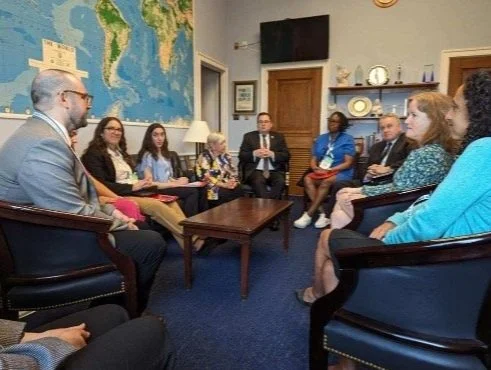

Meeting in DC with Congressman Chris Smith, advocating for Autism Cares Act
My Approach to Autism
My approach to autism is centered on optimizing the child’s overall health while thoroughly investigating all potential underlying causes of their autistic symptoms.
Autism is diagnosed solely by behavioral observation and reported symptoms, and the typical treatment approach consists of therapies, behavioral modification, and, when these fail, medication. While this approach is not entirely incorrect—there is substantial evidence that early intensive therapies can improve outcomes—a systems-based approach to autism biology suggests that autistic behaviors reflect a neurological manifestation of a broader systemic metabolic imbalance. This perspective shifts the focus from viewing autism purely as a neurodevelopmental disorder to understanding it as a systemic condition with neurological consequences. It also reframes the approach to treatment by emphasizing the identification and management of the biological underpinnings of autism.
With this paradigm in mind, the workup for autism and other neurodevelopmental disabilities is individualized, based on the child's specific symptoms and physical exam findings. Diagnostic investigations can include lab tests (such as thyroid, metabolic, heavy metal, and vitamin level testing), genetic testing (e.g., fragile X, microarray, Whole Exome Sequence), as well as neurological assessments like EEG and MRI.